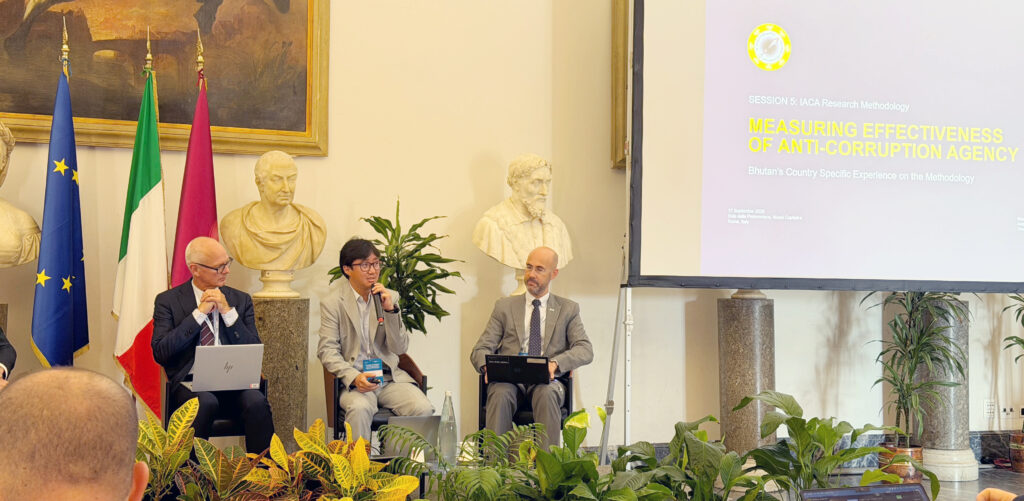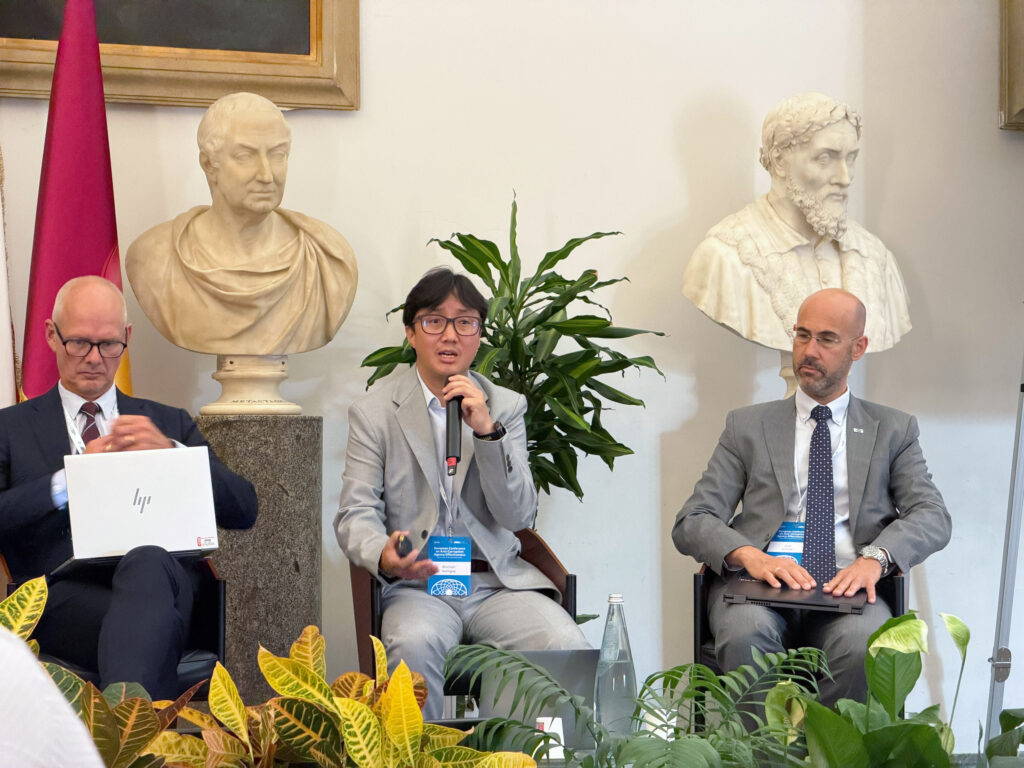
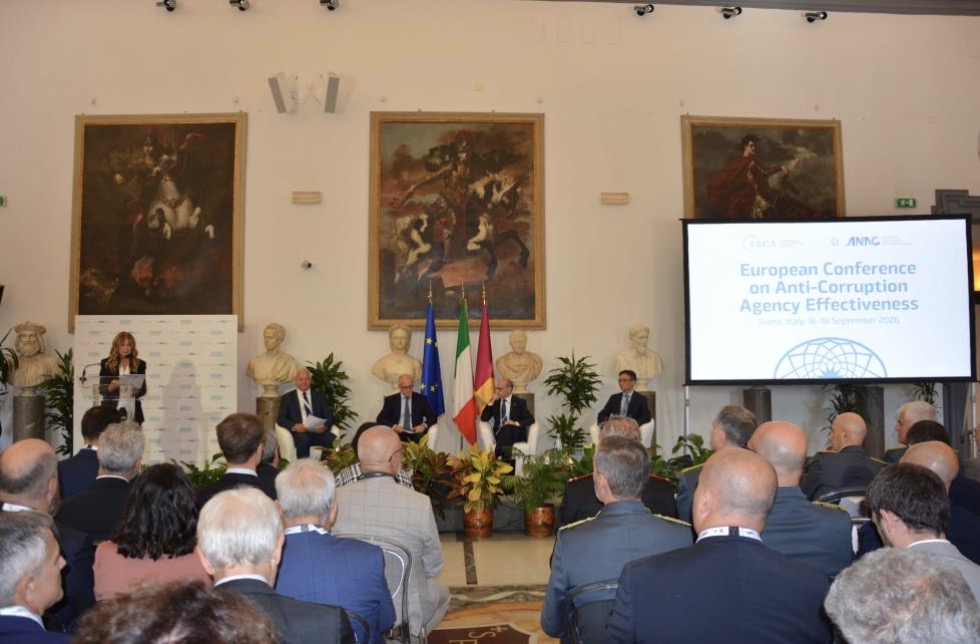
Upon the invitation of the International Anti-Corruption Academy (IACA) and the Italian National Anti-Corruption Authority (ANAC), the Anti-Corruption Commission (ACC) of Bhutan participated in the European Conference on Measuring the Effectiveness of Anti-Corruption Agencies (ACA), held from 16-18 September 2026 in Rome, Italy.
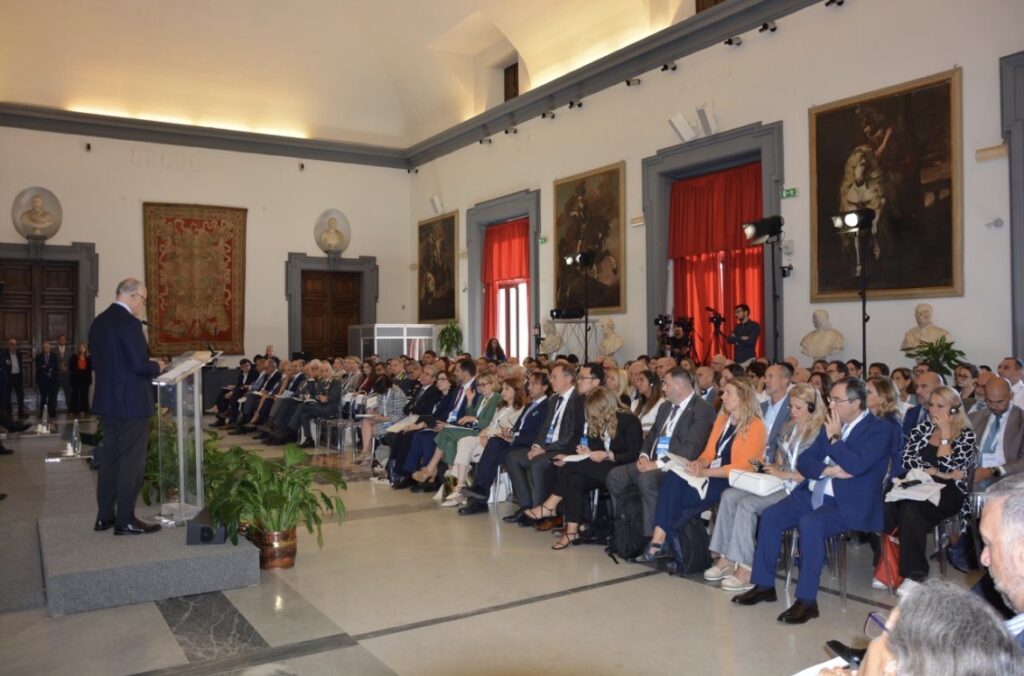
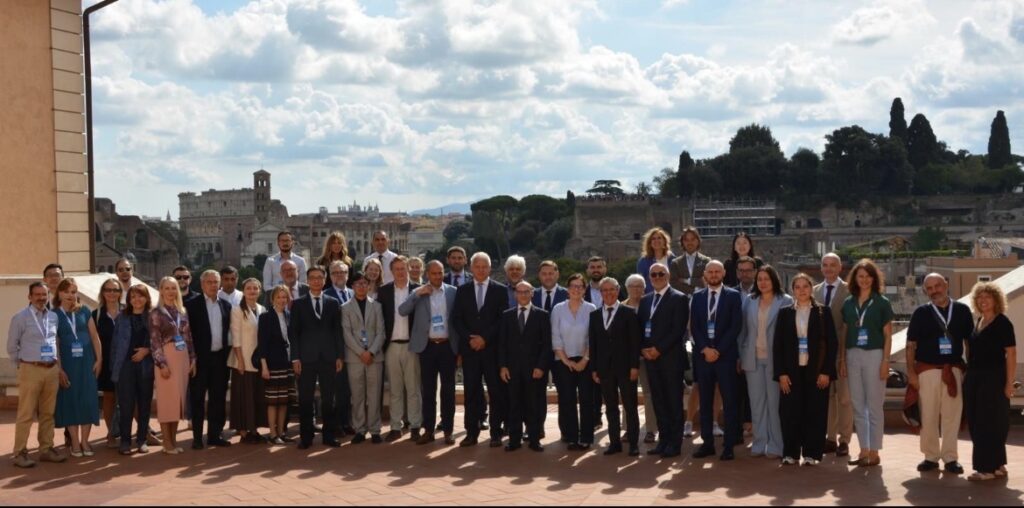
The Conference brought together 82 participants from 27 countries, comprising 63 anti-corruption practitioners and 19 representatives from academia, non-governmental organisations and IACA. The Conference focused on strengthening approaches to measuring the effectiveness and impact of ACAs, international cooperation and emerging issues affecting anti-corruption work.
Bhutan contributed to the Conference through interventions in two key thematic areas. During the session on “IACA’s research methodology to measure the effectiveness of ACAs”, the ACC shared Bhutan’s institutional experience and perspectives on measuring anti-corruption performance and effectiveness. The session contributed to IACA’s broader initiative to develop evidence-based approaches for assessing what ACAs achieve beyond conventional activity and output measures.
The ACC also made an intervention during the session on “the use of information technology and artificial intelligence in corruption detection”, sharing Bhutan’s experience in leveraging technology and emerging applications of AI to strengthen corruption detection and institutional effectiveness. The session brought together experiences from Bhutan, Brazil, Lithuania, IACA and ANAC, providing an opportunity to exchange practical approaches to technology-enabled anti-corruption work.
The Conference provided an important platform for the ACC to share Bhutan’s experience, learn from international practices and strengthen professional networks with IACA, ANAC and peer anti-corruption institutions, particularly in the areas of ACA effectiveness measurement, digital transformation and technology-enabled corruption detection.