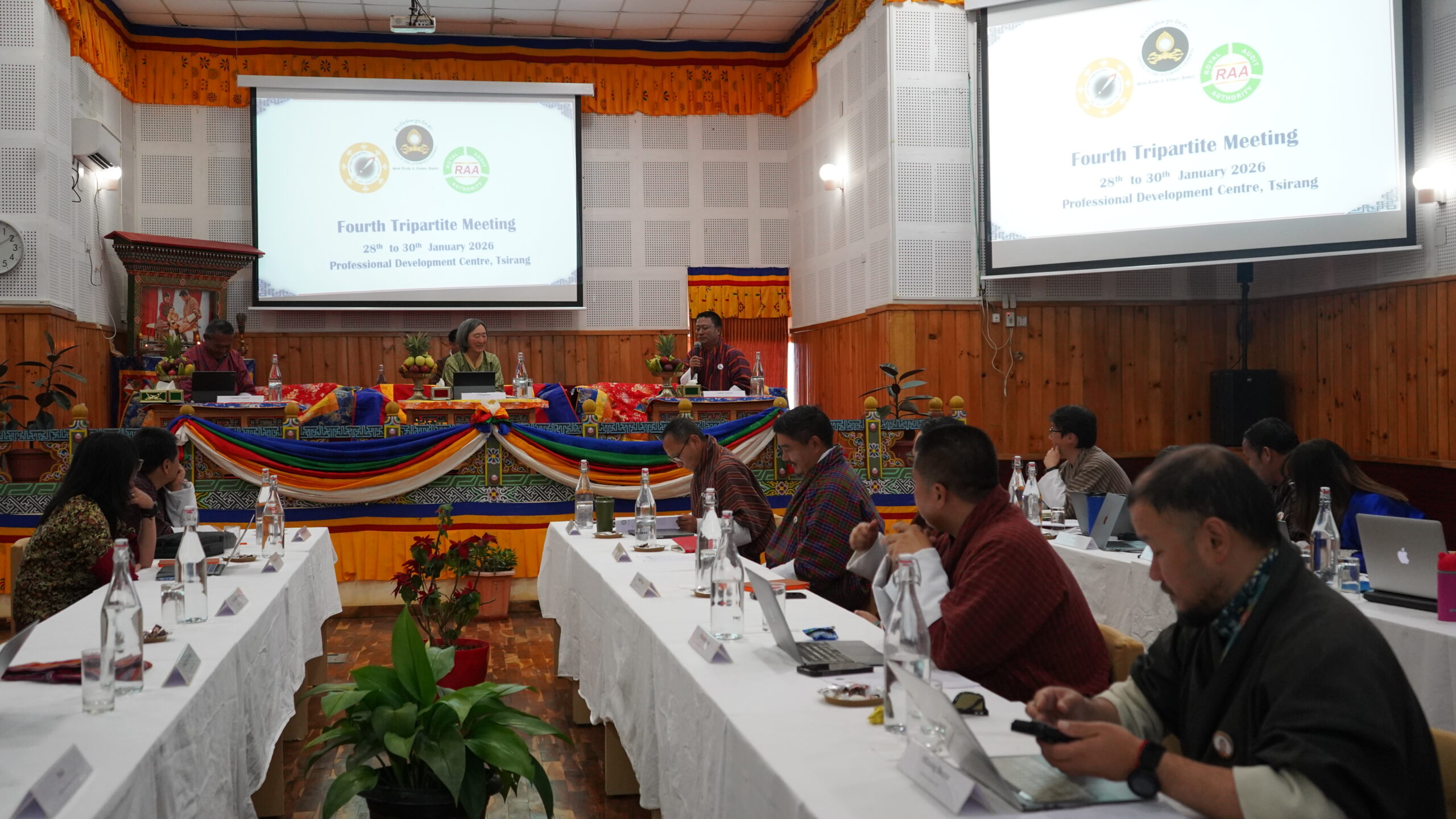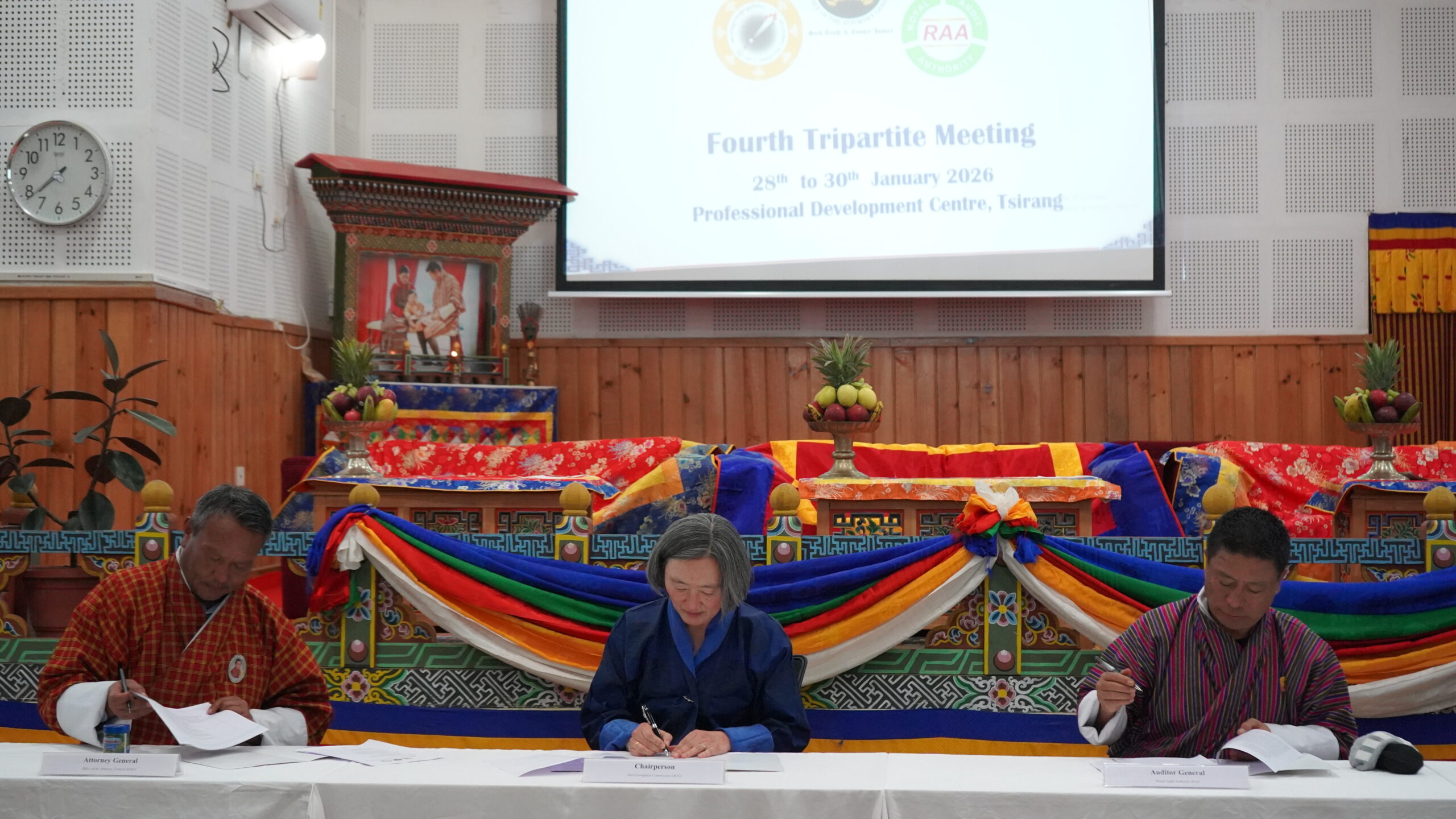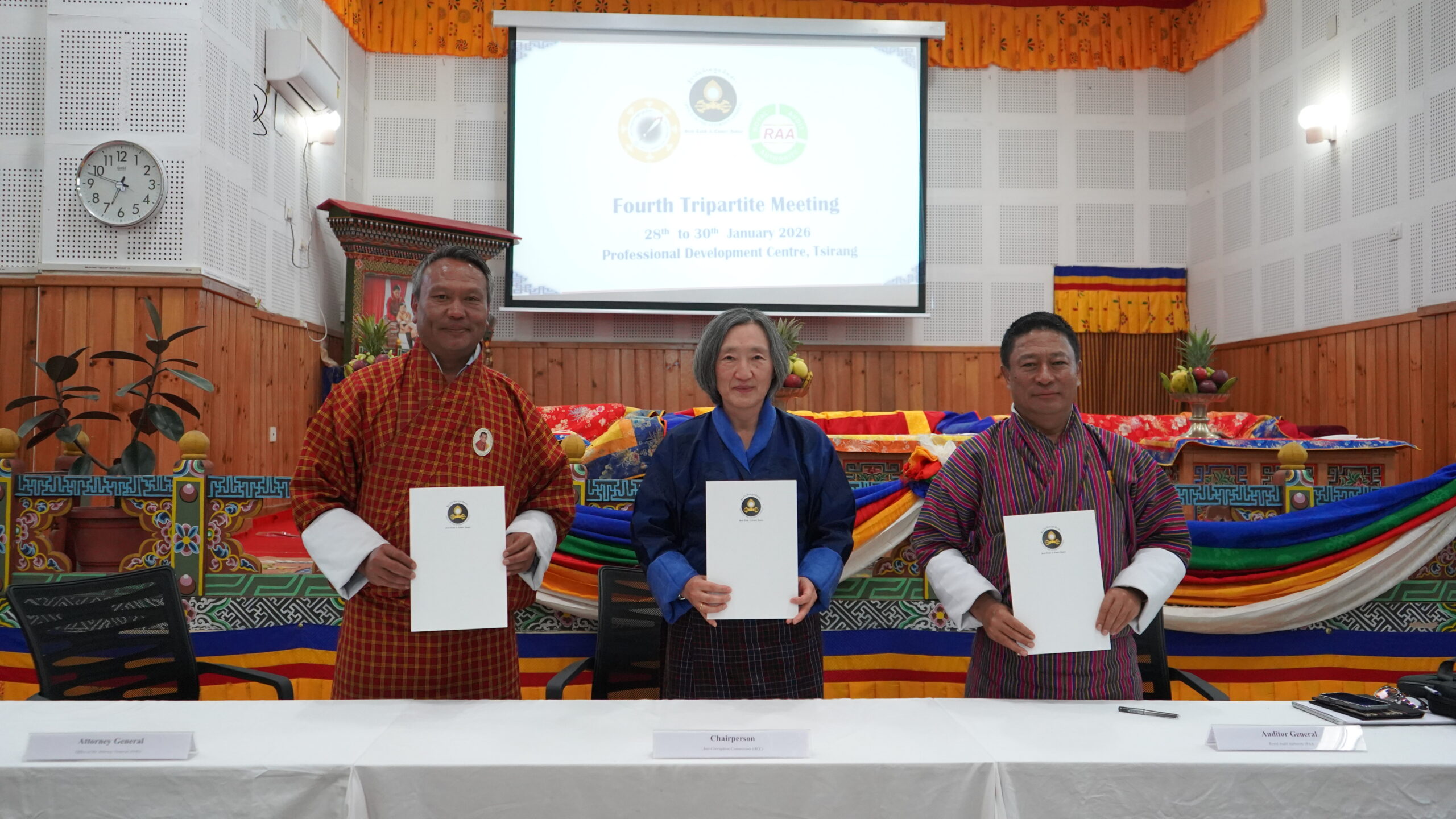
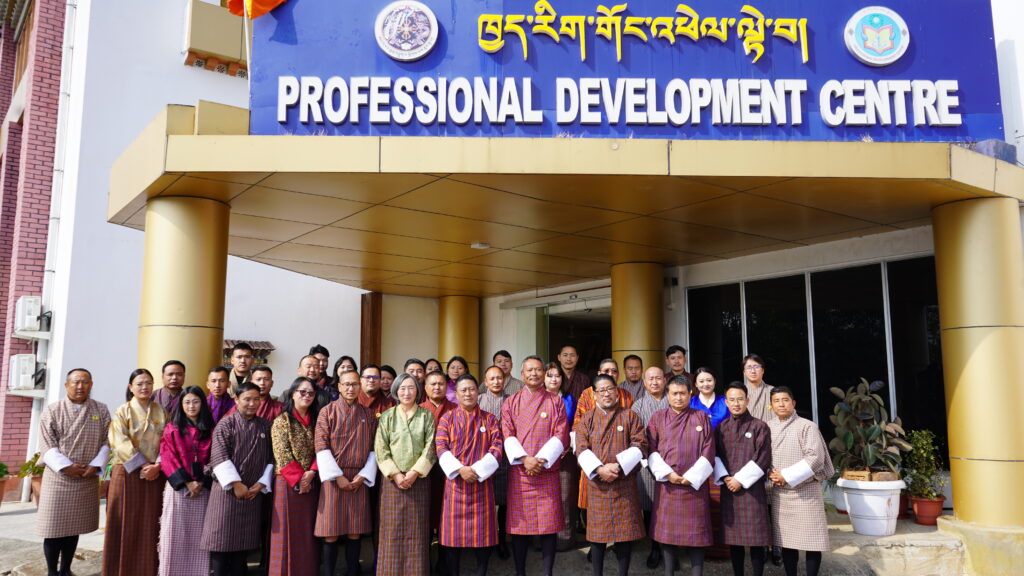
The Royal Audit Authority (RAA), Office of the Attorney General (OAG), and Anti-Corruption Commission (ACC) convened the 4th Tripartite Forum from 28-30 January 2026 at Professional Development Center, Tsirang to review progress, address systemic challenges, and further strengthen coordination across the audit, investigation, prosecution, and enforcement continuum.
The Forum reaffirmed the Tripartite mechanism as a practical and effective platform for aligning constitutional mandates and addressing issues that cannot be effectively resolved in isolation. It was noted that collaboration among the three agencies has matured from coordination in principle to addressing practical challenges arising in real cases.
Key discussions focused on improving case referral practices, particularly the need for clearer classification of matters prior to referral to the OAG; addressing enforcement challenges where court judgments are silent on recovery or restitution; and ensuring the proportional and time-bound use of injunctions on properties, with clarity on the transition of authority as cases move from investigation to prosecution.
The Forum also engaged in substantive deliberations on money laundering investigations and prosecutions, recognizing the inherent complexity of such cases, existing capacity constraints, and the importance of developing shared interpretative understanding and specialized skills to enhance effectiveness and consistency.
Other discussions included the need for early and structured engagement during high-risk audit findings, the sustainability of deploying public resources to prosecute internal cases of profit-making entities, and strengthening information sharing through the TRUST system.
A key outcome of the 4th Tripartite Forum was the signing of a Memorandum of Understanding (MoU) among the three agencies, reaffirming their shared commitment to pursue accountability firmly and within legal and constitutional boundaries.
The Forum recognized that clarity, due process, and disciplined coordination are essential to safeguarding public trust, and concluded with agreement on several forward-looking actions, including the development of clearer frameworks, targeted capacity building, and strengthened follow-up mechanisms to address systemic weaknesses.